


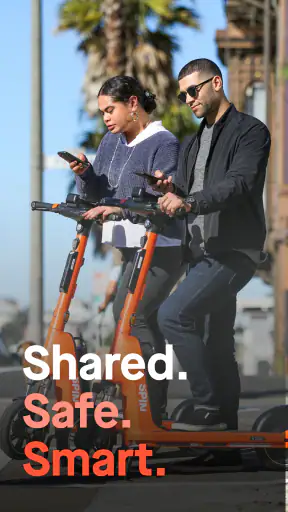
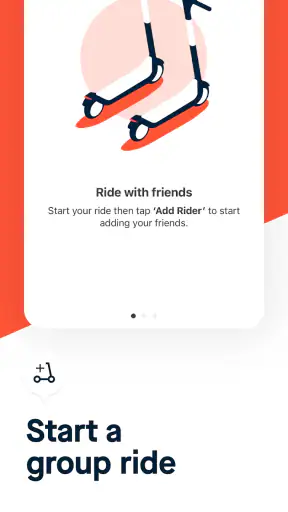
I find Spin most useful when I treat it as a practical last-mile tool rather than a complete replacement for buses, trains, walking, or cycling. It belongs to the Travel & Local category and focuses on shared electric scooters, so its value depends heavily on whether scooters are available where and when I need one. In the right situation, it can turn an awkward connection between a transit stop and a destination into a short, direct ride.
What makes me take it seriously is the scale of its user base and the fact that it has been available for years. Spin was released on May 28, 2017, and the app is developed by Pheenix USH LLC. It is free to install, rated for Everyone, and its average rating is 4.7 from around 51 thousand ratings. Those figures do not guarantee a perfect ride, but they suggest that the basic rental flow is familiar to a large number of riders.
My overall view is cautious but positive: Spin works best when convenience matters more than absolute predictability. I would recommend trying it for short urban trips, especially when I already know the local scooter rules and have another option available. I would not rely on it blindly for an airport connection, an appointment with no time cushion, or a route where a missing scooter would create a serious problem.
How Spin Builds Trust Before the Ride
A focused app with a clear job
The strongest trust signal is that the app has a narrow purpose. I am not opening Spin for a news feed, shopping offers, or a complicated travel-planning dashboard. I use it to look for a shared scooter, understand whether one is usable, and manage a short trip. That focused role makes the important choices easier to identify than they would be in a broader city-services app.
Still, a scooter app asks me to make several decisions before moving. I need to know where the vehicle is, whether I can reach it easily, whether the ride will fit local restrictions, and how I will finish the trip responsibly. The app is only part of that process. Street conditions, parking space, traffic, weather, and local enforcement can matter just as much as the screen in front of me.
I appreciate that Spin is free to download, because I can install it before I actually need a scooter and inspect the experience without making an immediate commitment. That is particularly useful when I am visiting an unfamiliar area. I can prepare ahead of time rather than standing outside a station and trying to solve the whole problem under pressure.
Popularity is useful, but not a promise
Spin has more than a million installs, which gives me some confidence that the service is not an obscure experiment. Its roughly fifteen thousand written reviews also provide a substantial body of user experience around the app. I read that kind of feedback as a signal about how people encounter the service in practice, not as proof that every city or every day will feel the same.
Shared mobility is unusually local. A smooth experience in one neighborhood does not automatically tell me what will happen across town. The number of scooters, the quality of sidewalks, parking expectations, and the availability of support can vary with the operating area. That is why I judge Spin less by its broad reputation and more by whether it gives me enough useful information for the specific ride I am about to take.
The app’s current version is 4.412.1.3, and it supports devices running iOS or Android 9 and later. That matters if I am using an older phone while traveling. I would check compatibility before leaving home, because a scooter service is not very helpful if the device I depend on cannot install or run the current app properly.
What I look for before unlocking
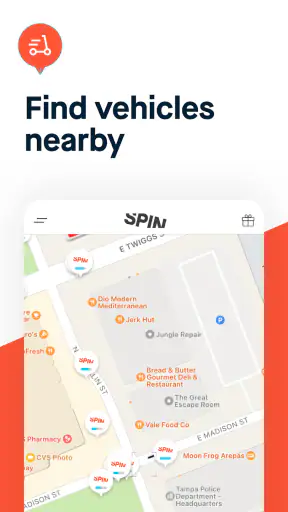
My preferred workflow starts before I walk toward a scooter. I open the map, compare the nearby choices, and think about the destination rather than simply choosing the closest vehicle. The closest scooter may be on the wrong side of a busy road, behind a locked gate, or in a place where reaching it takes longer than walking to another one.
I also pause to consider the final stop. A ride is not complete just because I have arrived at the destination. If I cannot identify a sensible place to leave the scooter, I treat that as a reason to reconsider the trip. This is one of the less obvious trade-offs of shared scooters: the vehicle can shorten the route while creating a parking problem at the other end.
That habit also helps me avoid unlocking impulsively. The map can make a scooter look close enough to justify a ride, but a short walk may be simpler if the route is crowded, the weather is poor, or I am carrying luggage. Spin is most convincing when it solves a real gap in my journey, not when I use it merely because a scooter icon happens to appear nearby.
Account control and visible choices
Because Spin is a transport service, I pay attention to the points where the app asks me to make a choice. I want to understand what I am accepting before I begin a ride, what account is being used, and how I can stop using the service later. I find that deliberate approach more useful than assuming that a familiar interface automatically protects me from mistakes.
I also prefer to keep my account details current and my phone secured with a device lock. That is ordinary digital hygiene, but it matters more when an app is connected to travel activity and payment decisions. I do not leave an unlocked phone unattended near a scooter, and I avoid handing my logged-in device to another rider. These steps are simple, yet they preserve my control better than trying to fix an avoidable account problem afterward.
My trust in Spin therefore comes from visible, understandable interactions rather than from the app’s popularity alone. When the app presents a choice, I want to be able to recognize what it means and decide for myself. If a screen feels rushed or unclear, I stop before proceeding instead of assuming that the next step will explain everything.
Permissions deserve a deliberate look
I review the permissions requested during setup and normal use instead of approving every prompt automatically. A mobility app may need certain device access for parts of its operation, but the important point for me is that I can see what is being requested and make an informed decision. I do not infer that a permission is harmless simply because the app is popular.
My practical rule is to grant only what I understand and need for the task in front of me. If I am preparing at home, I can take time to read a prompt. If I am already late and standing beside a scooter, I am more likely to make a careless choice. Setting up the account calmly in advance gives me better control than dealing with permissions during a rushed journey.
I use the phone’s own settings as a second checkpoint. They let me review or change access after installation, which is valuable because my needs can change. I might want a different level of access when planning a trip than when I am finished using the service. Keeping that review separate from the ride itself makes the decision less emotional and more deliberate.
Data-sensitive moments in normal use
The most privacy-sensitive moments are not limited to account creation. Using a scooter service naturally involves a connection between my account and a trip. I therefore pay attention when I open the map, search around a location, unlock a vehicle, or finish a ride. Even without making broad assumptions about data practices, I recognize that these actions can reveal a pattern of movement through the service.
That awareness changes how I use the app. I avoid browsing around a sensitive destination without a practical reason, and I close the app when I am done rather than leaving it open in the background out of habit. I also prefer to plan a general route mentally before searching, so I am not repeatedly checking places that I may never visit.
I do not treat those habits as evidence that Spin is unsafe. They are simply sensible boundaries for any location-based travel tool. The app gives me convenience by connecting a vehicle with a journey; I balance that convenience by limiting unnecessary activity and reviewing the choices presented on my device.
A realistic everyday trip
Imagine that I leave a train station after work and need to reach a meeting several blocks away. Walking would be possible, but I am carrying a laptop and the meeting begins soon. I open Spin before leaving the station, inspect the nearby scooters, and choose one that appears reachable without crossing an unpleasant stretch of traffic.
Before unlocking, I look beyond the first part of the trip. I consider whether the meeting location has a reasonable place to finish the ride and whether I will have enough time to deal with parking properly. If the scooter is farther away than expected, damaged, or surrounded by pedestrians, I do not force the plan. I walk, take a bus, or use another available option.
If the ride goes ahead, I keep the journey simple. I do not treat the scooter as permission to ignore road conditions or local rules. Near the destination, I slow down and think about other people using the sidewalk and the space where the scooter will remain. That final minute is important: a convenient ride can become a poor experience if I leave the vehicle in an obstructive place.
This scenario shows both Spin’s strength and its limitation. It can bridge a small gap quickly, but it cannot remove the uncertainty of shared availability or the responsibility of riding and parking thoughtfully. I value it most when I have enough time to make those decisions rather than when I am desperate for a guaranteed arrival.
Who should use it, and who should skip it?
Spin is a good fit for people who make short city trips, already understand scooter etiquette, and can adapt when the nearest vehicle is unavailable. It is especially useful for the first or last part of a longer journey, such as moving between a transit stop and an office, campus building, hotel, or neighborhood destination. It can also help when walking is inconvenient but a car would be excessive.
I would be more cautious about recommending it to someone who needs a fully predictable route, dislikes managing a vehicle at the end of a trip, or is uncomfortable making location and account decisions inside a mobile app. It is also not my first choice for a long journey, a route with heavy traffic, or a trip involving bulky luggage. In those situations, public transport, a taxi, a private bicycle, or simply walking may be less stressful.
Families should also think about the Everyone age rating in context. The rating describes the app’s content classification, not whether every rider is ready for urban scooter traffic. I would consider the rider’s practical ability, local rules, and supervision needs separately from the label shown in the store.
How it compares with ordinary alternatives
Compared with walking, Spin saves time and effort on suitable short routes, but walking is cheaper in the broader sense because it requires no vehicle search, unlock step, or parking decision. Walking also gives me more freedom in crowded areas. If the distance is manageable, I often prefer its certainty.
Compared with buses and trains, a scooter can provide a more direct trip and avoid waiting for a schedule. Public transport is usually better for longer distances, bad weather, heavy bags, and routes where I do not want to think about traffic or parking. I see Spin as a connector to public transport rather than a universal substitute for it.
Compared with a private bicycle, a shared scooter removes storage and ownership concerns. I do not need to maintain a personal vehicle or bring it with me all day. The trade-off is that I cannot count on finding the exact type of vehicle I want, and the shared option leaves me responsible for checking the scooter and ending the trip properly.
Compared with a taxi or rideshare, Spin can feel more independent and better suited to a quick local hop. A car is the stronger option when I have passengers, luggage, accessibility needs, or a destination that is difficult to reach safely by scooter. The right comparison is not simply speed; it is how much uncertainty and responsibility I am willing to accept for this particular journey.
Small habits that improve the experience
I get better results when I prepare the account and device before the first urgent trip. I check that the phone is charged, the app opens normally, and I understand the basic flow. That preparation prevents me from making rushed permission or account decisions beside a vehicle.
I also leave a little time for the unexpected. A scooter can be farther away than the map suggests, unavailable when I arrive, or unsuitable for the route I had in mind. Keeping a transit or walking backup turns Spin from a high-pressure gamble into a flexible option.
Another useful habit is to treat the final parking decision as part of route planning, not as an afterthought. I look for a responsible stopping area before I start and remain willing to walk the last portion if the destination itself is crowded. This makes the service more considerate for pedestrians and reduces the chance that convenience for me becomes an obstruction for someone else.
Finally, I review my device access and account choices occasionally, especially after changing phones or finishing a period of frequent travel. A quick check helps me keep control over an app I may use only occasionally. I prefer that to installing a travel tool, forgetting about it, and never revisiting how it fits into my digital routine.
My cautious verdict
After looking at Spin as both a transport tool and a location-based account service, I see a useful app with sensible boundaries. Its free entry point, broad availability across supported devices, and strong average rating make it easy to try. The long-running service and more than a million installs also give it a level of familiarity that matters when I am choosing a mobility option in an unfamiliar place.
My recommendation is conditional rather than enthusiastic in every situation. I would install Spin if I regularly make short urban trips and want another way to cover the gap between public transport and my destination. I would use it with a backup plan, review permissions and account choices carefully, and avoid assuming that the nearest scooter guarantees the fastest or safest journey.
The latest version, 4.412.1.3, is suitable for devices using iOS or Android 9 and later, and the app remains free with an Everyone content rating. Those details make the initial decision straightforward, but the more important decision is personal: can I ride responsibly, finish the trip considerately, and tolerate a little uncertainty? If the answer is yes, Spin can be a genuinely handy part of my local travel routine. If I need guaranteed availability, maximum privacy by avoiding location-based services, or a completely hands-off journey, I would choose walking, public transport, or a car instead.
In short, I recommend Spin as a practical short-distance option, not as a replacement for every other way of getting around. Its best quality is flexibility; its main weakness is that the experience still depends on the street, the vehicle, the local operating area, and my own preparation. Used with that realistic expectation, it earns a place on my phone without asking me to treat convenience as certainty.


